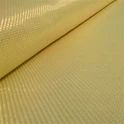
Aramid woven cloth, a remarkable material known for its exceptional strength and heat resistance, has been a subject of increasing interest in the aerospace industry. As a supplier of high - quality Aramid Woven Cloth, I am excited to explore the potential of this material in aerospace composites.
Properties of Aramid Woven Cloth
Aramid fibers, the building blocks of aramid woven cloth, possess unique properties that make them stand out. These fibers are known for their high tensile strength, which is several times stronger than steel on an equal weight basis. This strength allows aramid woven cloth to withstand extreme forces without breaking or deforming easily.
In addition to its strength, aramid woven cloth has excellent heat resistance. It can maintain its structural integrity at high temperatures, making it suitable for applications where heat is a concern. For example, in aerospace, components may be exposed to high - temperature environments during re - entry into the Earth's atmosphere or due to engine heat.
Another important property of aramid woven cloth is its low weight. In the aerospace industry, weight is a critical factor as reducing weight can lead to significant fuel savings and improved performance. Aramid woven cloth offers a lightweight alternative to traditional materials without sacrificing strength.
Current Applications in Aerospace
Aramid woven cloth is already being used in several aerospace applications. One of the most common uses is in the manufacturing of aircraft interiors. It is used for seat covers, wall panels, and partitions. The high strength and durability of aramid woven cloth ensure that these interior components can withstand the wear and tear of regular use.
In the field of aerospace insulation, aramid woven cloth also plays an important role. Its heat - resistant properties make it an ideal material for insulating components such as engines and electrical systems. By using aramid woven cloth for insulation, the risk of heat damage to sensitive equipment can be reduced.
Some aerospace manufacturers are also exploring the use of aramid woven cloth in the construction of aircraft wings and fuselages. The high strength - to - weight ratio of aramid woven cloth makes it a promising candidate for these structural applications. When combined with other composite materials, it can potentially improve the overall performance and safety of the aircraft.


Advantages of Using Aramid Woven Cloth in Aerospace Composites
1. Strength and Durability
As mentioned earlier, aramid woven cloth has high tensile strength, which means it can resist stretching and breaking under stress. In aerospace composites, this strength is crucial for withstanding the forces experienced during flight, such as aerodynamic forces, vibrations, and impacts. Components made with aramid woven cloth are less likely to fail, increasing the safety and reliability of the aircraft.
2. Heat Resistance
The aerospace environment is often exposed to high temperatures. For example, during re - entry, the outer surface of a spacecraft can reach extremely high temperatures. Aramid woven cloth's ability to withstand these high temperatures without significant degradation makes it an excellent choice for use in heat - sensitive areas of aerospace composites.
3. Weight Reduction
Weight is a major concern in the aerospace industry. By using aramid woven cloth in composites, the overall weight of the aircraft or spacecraft can be reduced. This reduction in weight can lead to improved fuel efficiency, longer flight ranges, and increased payload capacity.
4. Chemical Resistance
Aramid woven cloth also has good chemical resistance. It can resist the effects of various chemicals, such as fuels, lubricants, and cleaning agents, which are commonly used in the aerospace industry. This chemical resistance helps to maintain the integrity of the composite materials over time.
Challenges and Limitations
While aramid woven cloth has many advantages for aerospace composites, there are also some challenges and limitations that need to be considered.
1. Cost
Aramid fibers are relatively expensive to produce compared to some other materials. This high cost can make the use of aramid woven cloth in large - scale aerospace applications economically challenging. However, as the demand for aramid woven cloth increases and production technologies improve, the cost is expected to decrease over time.
2. Processing Difficulties
Aramid woven cloth can be difficult to process. It has a high stiffness, which can make it challenging to form into complex shapes. Specialized manufacturing techniques and equipment are often required to work with aramid woven cloth, which can add to the production cost.
3. Moisture Absorption
Aramid fibers have a tendency to absorb moisture. Moisture absorption can affect the mechanical properties of the aramid woven cloth and the composites made from it. In aerospace applications, where reliability is of utmost importance, this moisture absorption issue needs to be carefully managed.
Our Offerings as a Supplier
As a supplier of Aramid Woven Cloth, we offer a wide range of products to meet the diverse needs of the aerospace industry. Our Aramid Woven Cloth is made from high - quality aramid fibers, ensuring excellent strength and durability.
We also provide Aramid Fabric, which can be used in various aerospace applications. Our 310g Aramid Plain Fabric is a popular choice for its balanced properties of strength, weight, and flexibility.
We understand the challenges faced by the aerospace industry and are committed to providing solutions. Our technical team can work closely with customers to develop customized aramid woven cloth products that meet their specific requirements. We also offer support in the processing and application of our products to ensure optimal performance.
Conclusion
Aramid woven cloth has great potential for use in aerospace composites. Its unique properties of strength, heat resistance, and low weight make it an attractive option for various aerospace applications. Although there are some challenges and limitations, ongoing research and development efforts are likely to overcome these issues in the future.
If you are in the aerospace industry and are interested in exploring the use of aramid woven cloth in your composites, we invite you to contact us for further discussions. We are eager to work with you to find the best solutions for your specific needs and contribute to the advancement of the aerospace industry.
References
- "Advanced Composites in Aerospace Engineering" by John Smith, published by Aerospace Press.
- "Properties and Applications of Aramid Fibers" in the Journal of Materials Science, Volume 25, Issue 3.
- Industry reports on aerospace materials and technologies from leading research firms.