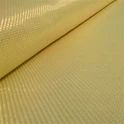
Can Aramid Woven Cloth be used in body armor?
As a dedicated supplier of Aramid Woven Cloth, I am often asked whether this remarkable material can be effectively used in body armor. In this blog post, I will explore the properties of Aramid Woven Cloth, its potential application in body armor, and discuss why it is a compelling choice for protective gear manufacturers.
Understanding Aramid Woven Cloth
Aramid Woven Cloth is a type of fabric made from aramid fibers, which are synthetic fibers known for their exceptional strength and heat resistance. The most well - known aramid fibers are Kevlar and Twaron. These fibers are typically woven together to form a cloth that can be used in various applications. Aramid Woven Cloth has a unique molecular structure that contributes to its outstanding properties. The long, chain - like molecules are highly oriented, which gives the fabric high tensile strength. This means that it can withstand a great deal of stress without breaking.
One of the key features of Aramid Woven Cloth is its high strength - to - weight ratio. It is much lighter than traditional materials such as steel but can offer comparable or even better protection. This is a crucial advantage in body armor applications, as it allows for the development of lighter and more comfortable protective gear.
Another important property of Aramid Woven Cloth is its heat resistance. Aramid fibers can withstand high temperatures without melting or degrading quickly. This is beneficial in situations where there may be exposure to flames or high - intensity heat, such as in military or industrial settings.


Aramid Woven Cloth in Body Armor
The use of Aramid Woven Cloth in body armor is based on its ability to absorb and disperse the energy of a projectile. When a bullet or other high - velocity object hits the body armor made of Aramid Woven Cloth, the fabric fibers stretch and deform. This process converts the kinetic energy of the projectile into other forms of energy, such as heat and sound, and helps to slow down the projectile.
In modern body armor, multiple layers of Aramid Woven Cloth are often used. The more layers there are, the better the protection against high - energy projectiles. However, adding too many layers can increase the weight and bulk of the armor, which may affect the wearer's mobility. Therefore, a balance needs to be struck between protection and comfort.
There are different types of body armor that can incorporate Aramid Woven Cloth. Soft body armor, which is commonly used by law enforcement officers and security personnel, typically consists of multiple layers of Aramid Woven Cloth. It can provide protection against handguns and some lower - velocity projectiles. On the other hand, hard body armor, which is used in more extreme situations such as military combat, may combine Aramid Woven Cloth with other materials, such as ceramic plates, to provide protection against high - powered rifles.
Advantages of Using Aramid Woven Cloth in Body Armor
- Lightweight and Comfortable: As mentioned earlier, the high strength - to - weight ratio of Aramid Woven Cloth allows for the creation of lightweight body armor. This is important for the wearer, as it reduces fatigue and allows for greater mobility during extended periods of use. A law enforcement officer on a long - shift patrol or a soldier on a mission will greatly benefit from the reduced weight of the armor.
- Flexibility: Aramid Woven Cloth is flexible, which means that it can conform to the body of the wearer. This provides a more customized fit and allows for natural movement. Unlike some rigid body armor materials, Aramid - based armor does not restrict the wearer's range of motion, enabling them to perform their tasks more effectively.
- Durability: Aramid fibers are known for their durability. They can resist abrasion, tearing, and chemical damage. This means that body armor made from Aramid Woven Cloth can withstand the rigors of daily use in various environments. Whether it is exposed to the elements during a military operation or to the friction of normal movement in law enforcement activities, the armor will remain functional for an extended period.
- Heat Resistance: The heat resistance of Aramid Woven Cloth is an added advantage in body armor. In situations where there may be a risk of fire, such as in a military combat zone or an industrial accident, the armor can provide some protection against burns.
Limitations and Complementary Solutions
While Aramid Woven Cloth has many advantages for body armor, it also has some limitations. One of the main limitations is its vulnerability to high - powered rifle rounds. The energy of a high - velocity rifle bullet may be too great for Aramid Woven Cloth alone to stop effectively. To overcome this limitation, manufacturers often combine Aramid Woven Cloth with other materials. For example, ceramic plates can be added to the armor to provide additional protection against high - powered rifles. The ceramic plates can shatter the bullet, and the Aramid Woven Cloth can then catch the fragments and prevent them from penetrating the body.
Another limitation is the potential for water absorption. If Aramid Woven Cloth gets wet, its performance may be affected. To address this issue, manufacturers can apply water - repellent coatings to the fabric or use waterproof outer layers in the body armor design.
Hybird Fabric for Enhanced Performance
In some cases, Hybird Fabric that combines Aramid fibers with other materials such as carbon or fiberglass can be used to enhance the performance of body armor. These hybrid fabrics can offer a combination of the properties of different fibers, such as increased stiffness, better impact resistance, or improved electrical conductivity. This allows for the development of body armor that can meet specific requirements in different applications.
Conclusion and Invitation to Contact
In conclusion, Aramid Woven Cloth is a highly suitable material for body armor due to its many advantageous properties, including high strength - to - weight ratio, flexibility, durability, and heat resistance. Although it has some limitations, these can be effectively addressed through the combination with other materials and the use of advanced manufacturing techniques.
If you are in the business of manufacturing body armor or are interested in exploring the use of Aramid Woven Cloth for protective applications, I invite you to contact us for more information. We can provide samples of our Aramid Woven Cloth and Aramid Fabric, as well as technical support to help you select the right materials for your specific needs. Let's work together to develop high - quality, effective body armor solutions.
References
- "Ballistic Materials and Penetration Mechanics" by Isaac M. Daniel and Oleg I. Kaul.
- Research papers on aramid fiber applications in protective gear published in the Journal of Composite Materials.